
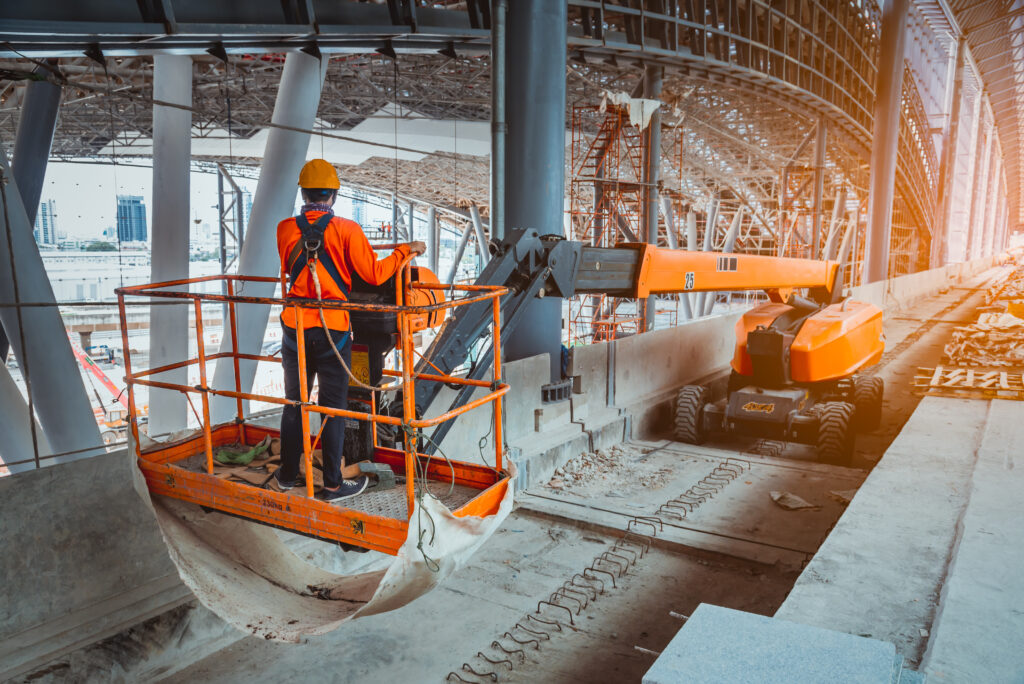
In logistics and construction here in Dallas, our efficiency is measured in seconds and safety is non-negotiable. Whether you are managing a sprawling distribution center in Fort Worth or a specialized manufacturing plant, the ability to access high-reach areas safely is a daily requirement. Ladders and scaffolding are things of the past — today, the backbone of vertical efficiency is the Aerial Lift.
However, simply knowing you need a lift isn’t enough. The market is saturated with various types, sizes, and power configurations. Choosing the wrong equipment can lead to project delays, safety hazards, and inflated costs. At Southwest Materials Handling Company, we understand that every facility has unique spatial constraints and operational demands.
In this post, let’s explore the different categories of Aerial Lifts, how to identify the specific machine for your application, and the strategic financial considerations between buying and opting for an Aerial Lift rental.
What Is An Aerial Lift?
At its core, an Aerial Lift is a vehicle-mounted device used to elevate personnel and equipment to temporary workstations at height. Often referred to as Mobile Elevating Work Platforms (MEWPs), these machines are designed to provide stability and flexibility that manual climbing methods cannot match.
For a warehouse manager, an Aerial Lift is more than just an elevator; it is a productivity tool. It allows your maintenance teams to change lighting fixtures without shutting down an aisle for hours. It enables inventory control specialists to conduct cycle counts on the top racks safely.
Modern Aerial Lifts come equipped with advanced safety features, including tilt alarms, load sensing systems, and pothole protection. However, the versatility of the machine depends entirely on selecting the right type. A machine designed for flat concrete slabs will fail miserably on a muddy construction site, and a diesel engine cannot be used in an unventilated indoor warehouse.
Types of Aerial Lifts
To make an informed decision, you must understand the “geometry” of your workspace. Are you going straight up? Do you need to reach over obstacles? Here is a breakdown of the most common Aerial Lifts we see in the Texas market.
Scissor Lifts
If your application requires lifting heavy loads or multiple workers straight up, the scissor lift is the industry standard. They offer a larger platform workspace and are exceptionally stable. They are ideal for indoor maintenance, sign installation, and inventory management.
Boom Lifts
When you need reach and flexibility, you need a boom lift. These fall into two main categories:
1. Telescopic Boom Lifts:
Also known as “stick booms,” these extend in a straight line. They offer the greatest horizontal outreach and are perfect for open areas where you need to reach very high positions directly.
2. Articulating Boom Lifts:
These are the “knuckle” booms. They have multiple joint sections that allow the operator to go “up and over” obstacles. If you need to access a workspace above shelving units or machinery, you likely need an Articulating Boom Lift Rental. The geometry of these lifts allows for precise positioning in tight, congested spaces.
To Buy or Rent Your Aerial Lifts
Once you have identified the type of lift you need, the next question is financial: should you purchase the equipment, or is an Aerial Lift rental the smarter play? This decision typically comes down to utilization, budget, and maintenance capabilities.
When to Rent
For many businesses, an Aerial Lift rental is the most cost-effective solution. If your need for high-reach equipment is seasonal—perhaps for quarterly inventory audits or annual facility maintenance—renting makes perfect sense.
- Flexibility: An Articulating Boom Lift Rental allows you to get the specific machine you need for a specific job. You aren’t stuck with a scissor lift when you actually need a boom.
- Capital Preservation: Opting for an Aerial Lift rental keeps your capital free for other investments. You avoid the upfront cost of purchasing and the depreciation that follows.
- Maintenance Free: When you utilize Articulating Boom Lift Rentals, the burden of maintenance falls on the provider. You don’t need to worry about hydraulic leaks or battery replacements.
We see a high volume of requests for Articulating Boom Lift Rentals in Dallas during construction peaks and holiday rush preparations. The ability to scale your fleet up and down is a massive logistical advantage.
When to Buy
However, if you are using the equipment daily, purchasing becomes the better option. If an Aerial Lift is a core part of your daily workflow — for example, in a high-volume distribution center — the rental fees will eventually eclipse the purchase price. Ownership gives you 24/7 access to the machine without scheduling delivery or pickup.
If you decide to buy, we often recommend looking at a JLG aerial lift. Their resale value holds up well, and parts availability is excellent.
The Hybrid Approach
Many successful operations use a hybrid model. They own their core fleet of scissor lifts for daily use but utilize Aerial Lift rental services for specialized tasks. For instance, you might own two scissor lifts but call us for an Articulating Boom Lift Rental when you need to repair the HVAC unit on the roof.
Aerial Lifts are not one-size-fits-all. By analyzing your specific needs—height, reach, weight capacity, and terrain—you can ensure safety and efficiency. Whether you need a short-term Articulating Boom Lift Rental or are looking to add a permanent JLG aerial lift to your fleet, the choice you make impacts your bottom line.
The landscape of material handling is evolving, and the demand for vertical access is increasing. Choosing the right Aerial Lift requires a balance of operational understanding and financial strategy. It is about more than just getting off the ground; it is about getting the job done safely and efficiently.
At Southwest Materials Handling Company, we are dedicated to helping Texas businesses navigate these choices. Whether you need the versatility of Aerial Lifts for a complex construction project or a reliable maintenance tool for your warehouse, we have the expertise to guide you. From Articulating Boom Lift Rentals to sales of top-tier equipment, we are your partners in elevation.
Are you ready to take your operations to new heights? Do not let the wrong equipment ground your productivity. Contact Southwest Materials Handling Company today to discuss your specific needs. Whether you are looking to buy or need a reliable Aerial Lift rental in Dallas, we have the inventory and expertise to support you.
Frequently Asked Questions
Q. What is the difference between a scissor lift and a boom lift?
A scissor lift moves only vertically and offers a larger platform for workers and tools, making it ideal for tasks directly overhead. A boom lift, such as a JLG aerial lift, has an extendable arm that allows for both vertical and horizontal reach. If you need to reach over obstacles, you should consider Articulating Boom Lift Rentals.
Q. Do I need a license to operate an aerial lift?
Yes, OSHA requires that all operators of Aerial Lifts be trained and certified. This ensures the safety of the operator and those working around them. When you arrange an Aerial Lift rental, it is the employer’s responsibility to ensure that the operator is properly certified on that specific type of equipment.
Q. How do I know what size aerial lift I need?
You need to calculate the working height (the height you need to reach plus 6 feet for the operator) and the horizontal reach. Also, consider the weight capacity required for personnel and tools. If you are unsure, our team can help you assess if a standard scissor lift or an Articulating Boom Lift Rental is the best fit for your facility.